

Rugby Union
Rennie Gets the Nod… But the NZR Process Was a Bloody Shambles
The debate has been loud, emotional, and full of opinions.
by Joey Nanai I 5th March 2026
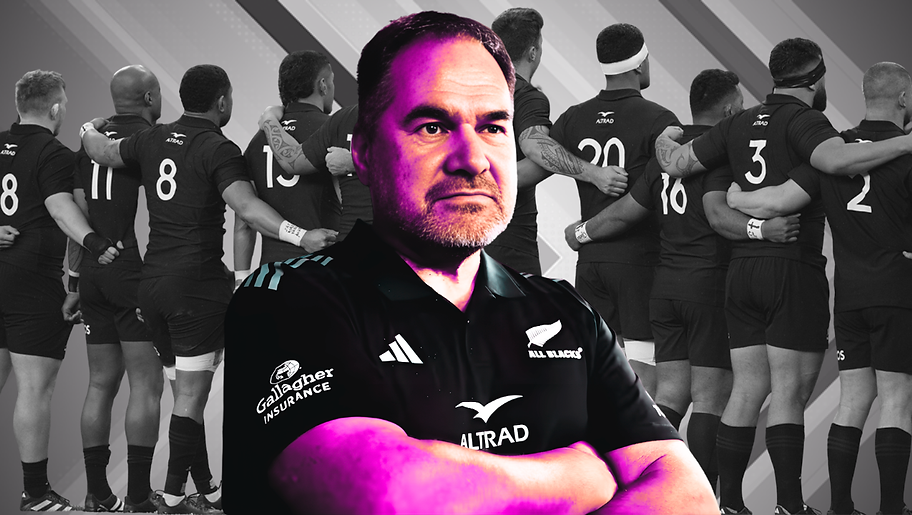
Names have been thrown around, endorsements quoted, and international voices have weighed in. One of the louder moments came when Rassie Erasmus publicly praised Jamie Joseph, suggesting that when Joseph walks into a room of coaches, his experience and work ethic command respect.
It was a strong endorsement. Joseph’s résumé backs it up. His work with Japan elevated that program to global respectability, and his success with the Highlanders showed he could build a culture tough enough to compete with anyone. For many observers, he represented a natural continuation of the hard-nosed leadership style New Zealand rugby respects.
And fair enough too. Joseph has done some bloody marvelous work over the years. In my previous article I said exactly what I thought New Zealand Rugby should do: pull the trigger and back Joseph. My view was simple. He had the credibility, the international respect, and the coaching scars to lead the next era. But rugby debates don’t appoint coaches. Decisions do. And the decision has now been made. The job has gone to Dave Rennie.
THE 135 FOOTY SHOW PODCAST
Before we even get to Rennie, though, let’s address the elephant in the room.
The way NZR handled this entire process has been a bloody shambles.
From the moment Scott Robertson — Razor — was pushed aside, the whole thing felt clumsy, confused, and poorly communicated. Here you have a coach who delivered multiple Super Rugby titles, built a high-performance culture, and proved repeatedly he could win under pressure. And yet somehow the organisation managed to turn the succession conversation into a drawn-out circus. Mixed signals.
Public speculation. Leaked conversations. And a selection process that dragged on longer than it needed to. For a country that prides itself on rugby excellence, the governance side of this looked anything but excellent.
It looked amateur.
The reality is that leadership decisions in elite sport require clarity and conviction. You either back someone early and publicly, or you run a tight process and announce a result quickly. What you don’t do is allow the entire rugby public to watch the sausage being made. Because that invites confusion. It invites rumour. And it invites people to conclude that nobody at the top actually knows what they’re doing. That’s exactly what happened here. None of that is Rennie’s fault. And that distinction matters.
Because once the appointment was confirmed, the conversation changed immediately. All the armchair analysis, the WhatsApp group theories, and the endless speculation about who should have been picked became largely irrelevant. Some of it is thoughtful. Some of it is insight. A fair portion of it, if we’re honest, is just bullshit. The fact is simple. The job is Rennie’s now. Which means the conversation moves away from hypotheticals and straight into accountability. Because coaching the New Zealand national rugby union team isn’t just another rugby job. It’s the most scrutinised role in the sport.
In New Zealand, the All Blacks are not merely a team. They are part of the national identity. Every selection, every tactical decision, every performance becomes a topic of national discussion. That level of scrutiny crushes some coaches. Others thrive in it. Historically, success with the All Blacks is measured against a brutal standard. Winning most of your matches isn’t enough. Playing attractive rugby isn’t enough. Even dominating for several seasons isn’t enough if the cycle doesn’t end with a Rugby World Cup trophy. That is the reality Rennie now walks into.
THE CAM SCHUSTER PODCAST
But there is another dimension to this appointment that deserves recognition. When Rennie takes the reins, he becomes the first Pasifika person to coach the All Blacks. In a country where Pacific players have long been central to the strength, identity, and physicality of New Zealand rugby, that milestone matters.
For decades, Pasifika athletes have helped shape the modern All Blacks — from the power and presence in the forward pack to the flair and explosiveness in the backline. Seeing a Pasifika leader step into the top coaching role reflects the evolving face of New Zealand rugby leadership. That moment alone is significant. To understand why Rennie got the nod, you also have to look at his coaching history. At t he Chiefs, he helped transform a franchise that had never won a Super Rugby title into champions. Those years weren’t just successful — they were widely regarded as bloody marvellous for the way the team played and the belief he built inside the group.
He earned a reputation for demanding high standards while keeping players grounded and focused. His tenure with the Wallabies was far more turbulent. Australian rugby was dealing with structural issues, politics, and inconsistent performances. It was hardly a stable environment. Yet many players still speak highly of the honesty he brought into that setup. And those years may prove valuable preparation. Because coaching the All Blacks is not a job for anyone remotely chicken shit. You need conviction. You need thick skin. And you need the ability to make decisions knowing half the country will question them by morning.
That’s the job. So yes — the NZR process was messy. Yes — the Razor saga left a sour taste. But now the decision is made. And once the whistle blows, none of that noise will matter. Because the All Blacks job ultimately simplifies everything. You either win… or you don’t.
And for Dave Rennie, the real test is only just beginning.